A Practical Guide To Selecting Industrial Plotter Blades
If you are researching about plotter blades for industrial plotter machines, understanding blade geometry and application differences is essential. The right plotter blade directly impacts cut quality, material waste, machine efficiency, and overall production costs. At X-Keenblades.com, we supply high-precision plotter blades for industrial buyers who demand reliability, durability, and consistent results in high-volume environments. In this guide, we explain the most important technical aspects you should know about plotter blades, including blade angles, offset, and available blade types.
1. Cutting Angle: The Core Performance Factor
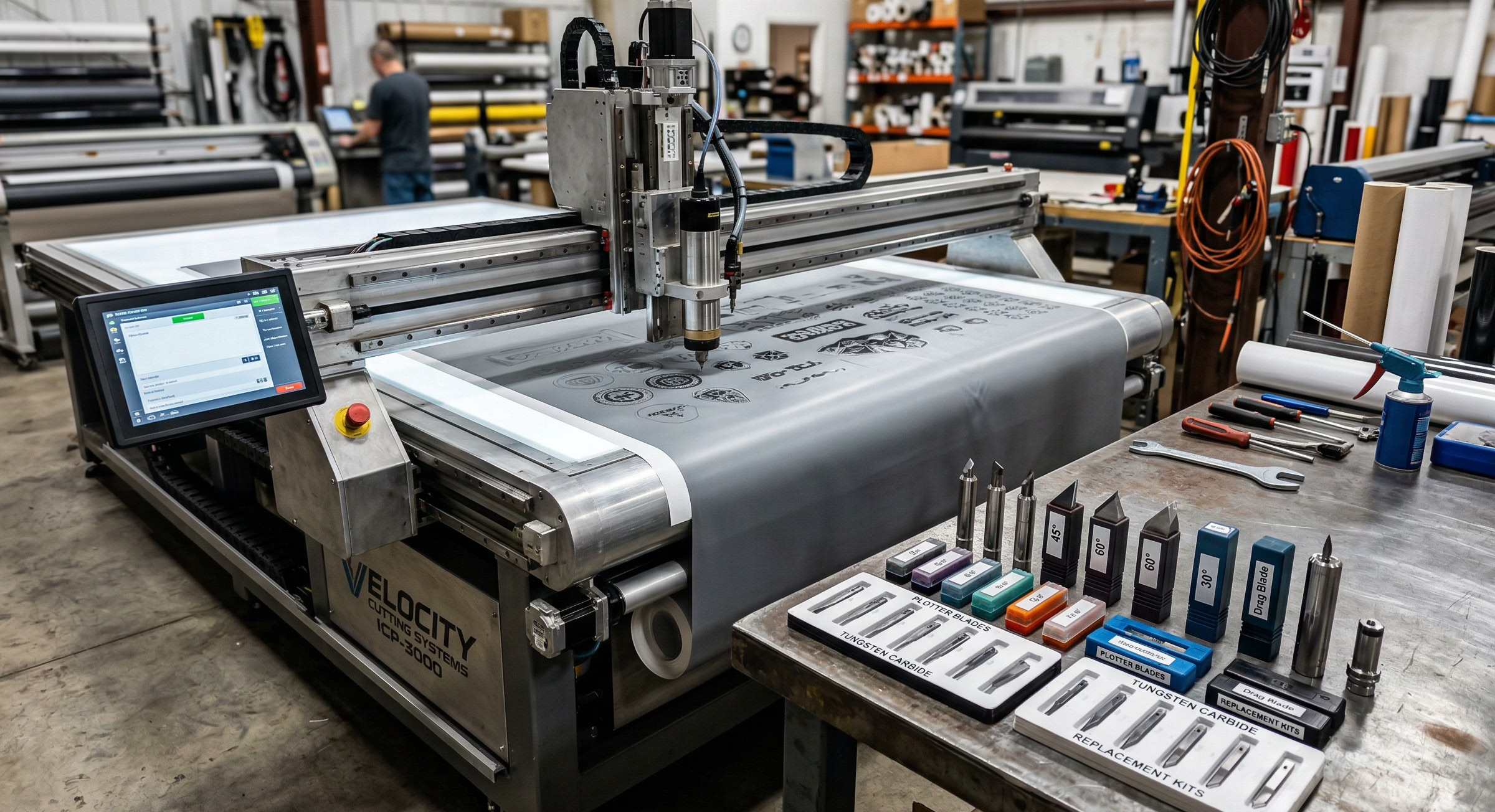
One of the most important specifications when learning the most important aspects of plotter blades is the cutting edge angle. The angle determines how deeply and aggressively the blade penetrates the material.
Plotter blades are typically available in three standard angles:
30° Plotter Blades
30° blades are designed for thin films with a density of approximately 25–50 microns. These include:
• Standard vinyl
• Metallized films
• Reflective films
• Tinting films
Because of their shallow angle, 30° plotter blades are ideal for cutting small details and fine graphics with high precision.
45° Plotter Blades
45° blades are considered universal and are the most commonly used option in industrial environments. They are suitable for medium-thickness materials, typically ranging from 50–1000 microns.
If you are unsure which blade to select, a 45° blade is often the safest starting point for general vinyl cutting applications.
60° Plotter Blades
60° blades are engineered for thicker and more demanding materials (above 100 microns), such as:
• Sandblasting films
• Heavy reflective films
• Fluorescent materials
• Thick specialty vinyl
The steeper angle allows deeper penetration and cleaner cutting in dense materials.
Understanding the correct angle is fundamental when deciding on plotter blades for your production line.
2. Blade Offset: Critical for Clean Corners
Another key aspect to understand when selecting plotter blades is blade offset. Offset refers to the distance between the blade tip and its rotational axis.
In drag knife systems, the blade trails behind the axis of rotation. The offset value compensates for this distance when the machine changes direction, especially when cutting sharp corners.
Incorrect blade offset can lead to:
• Rounded corners
• Overcut edges
• Incomplete cuts
• Material waste
Correctly calibrated offset ensures sharp corners and accurate dimensional cutting, which is particularly important in industrial label production, packaging, and precision film processing.
Types of Plotter Blades for Industrial Applications
When researching about plotter blades, it is important to recognize that not all blades are drag knives. Industrial plotter machines support various blade technologies depending on the material and application.
Drag Blade
The most common blade type for vinyl and thin films. Ideal for high-speed cutting of flexible materials.
Oscillating Blade
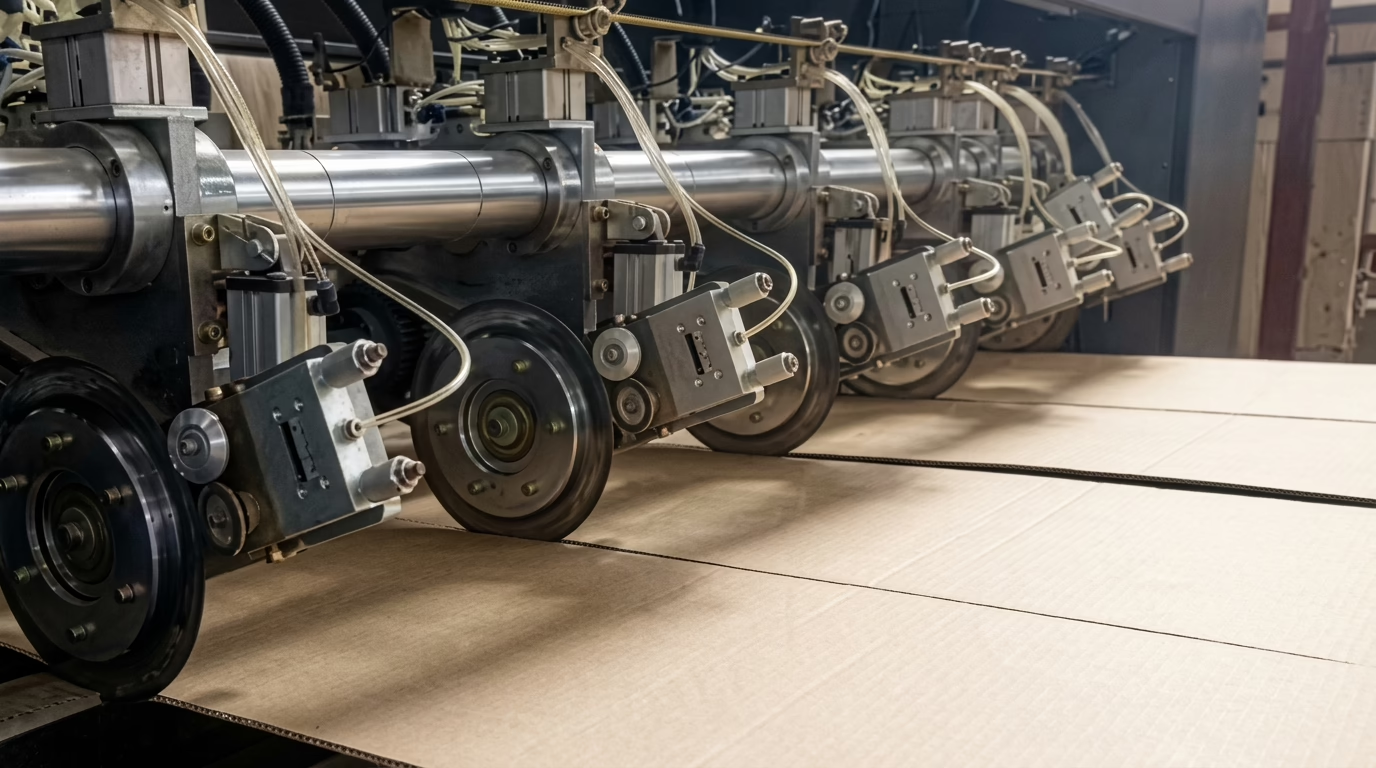
Designed for thicker and softer materials such as foam, cardboard, and gaskets. The blade moves up and down rapidly to cut dense substrates cleanly.
Tangential Blade
Unlike drag knives, tangential blades rotate actively to align with the cutting direction. This provides superior corner accuracy in thicker materials.
Rotary Blade
Used for textiles and soft materials where rolling motion improves cut quality.
Kiss-Cut Blade
Engineered for cutting through the top layer of material without penetrating the liner—ideal for labels and decals.
V-Cut and Bevel Cut Blades
Used in packaging, display production, and foam processing where angled edges are required.
Perforation and Scoring Blades
Perfect for tear-off lines, folding lines, and packaging applications.
Tungsten Carbide Blades
For buyers concerned about durability, tungsten carbide plotter blades offer extended wear resistance and longer tool life in high-volume production.
Selecting the right type is essential when making plotter blades purchase decisions.
Material Compatibility and Wear Resistance
Industrial buyers must consider not only blade geometry but also material composition.
High-quality tungsten carbide plotter blades significantly outperform standard steel blades in terms of:
• Edge retention
• Wear resistance
• Reduced downtime
• Lower long-term replacement costs
In demanding production environments, investing in premium plotter blades leads to measurable gains in efficiency and consistency.
Why Industrial Buyers Trust X-Keenblades.com
At X-Keenblades.com, we understand that industrial plotter machines require precision-engineered components.
Our plotter blades are manufactured to strict tolerances to ensure:
• Accurate cutting performance
• Stable blade geometry
• Consistent offset accuracy
• Long operational lifespan
Whether you are cutting vinyl, foam, packaging board, reflective films, or specialty materials, we offer tailored solutions based on your machine type and production requirements.
Final Thoughts About Plotter Blades
When making procurement decisions about plotter blades, the two most critical technical factors are cutting angle and offset. Beyond that, selecting the correct blade type and material composition ensures optimal performance for your specific application.
For industrial buyers, the right plotter blade reduces waste, improves precision, and increases overall productivity.
If you would like expert advice on selecting the right plotter blades for your industrial plotter machines, contact X-Keenblades.com for technical guidance and customized solutions.