


Choosing the Right Blade for the Job
Industrial cutting processes rely heavily on precision, durability, and efficiency. Understanding the different blade types in industrial applications is essential for engineers, machine operators, and industrial buyers who want to optimize performance and reduce downtime. Industrial blades are manufactured in a wide range of shapes, geometries, and materials, each designed for specific cutting, slitting, scraping, or processing tasks.
Selecting the correct blade type improves cut quality, extends blade life, and increases productivity in manufacturing environments.
Which Blade Types Are There In Industrial Applications?
Razor Blades
Razor blades are among the most widely used blade types in industrial applications, particularly in converting, packaging, and precision cutting operations.
Single Edge Razor Blades
Single edge blades feature one sharp cutting edge and a reinforced back edge. They are commonly used in scrapers, trimming tools, and precision cutting devices. Because one side of the blade remains flat or reinforced, they are safer to handle and easier to mount in industrial holders.
Double Edge Razor Blades
Double edge blades have two sharp cutting edges and are often produced with a three-hole mounting configuration. This design allows the blade to be securely installed in industrial slitting machines. These blades are frequently used for cutting films, foils, paper, textiles, and flexible packaging materials in high-speed converting lines.
Slitter Blades For Industrial Applications
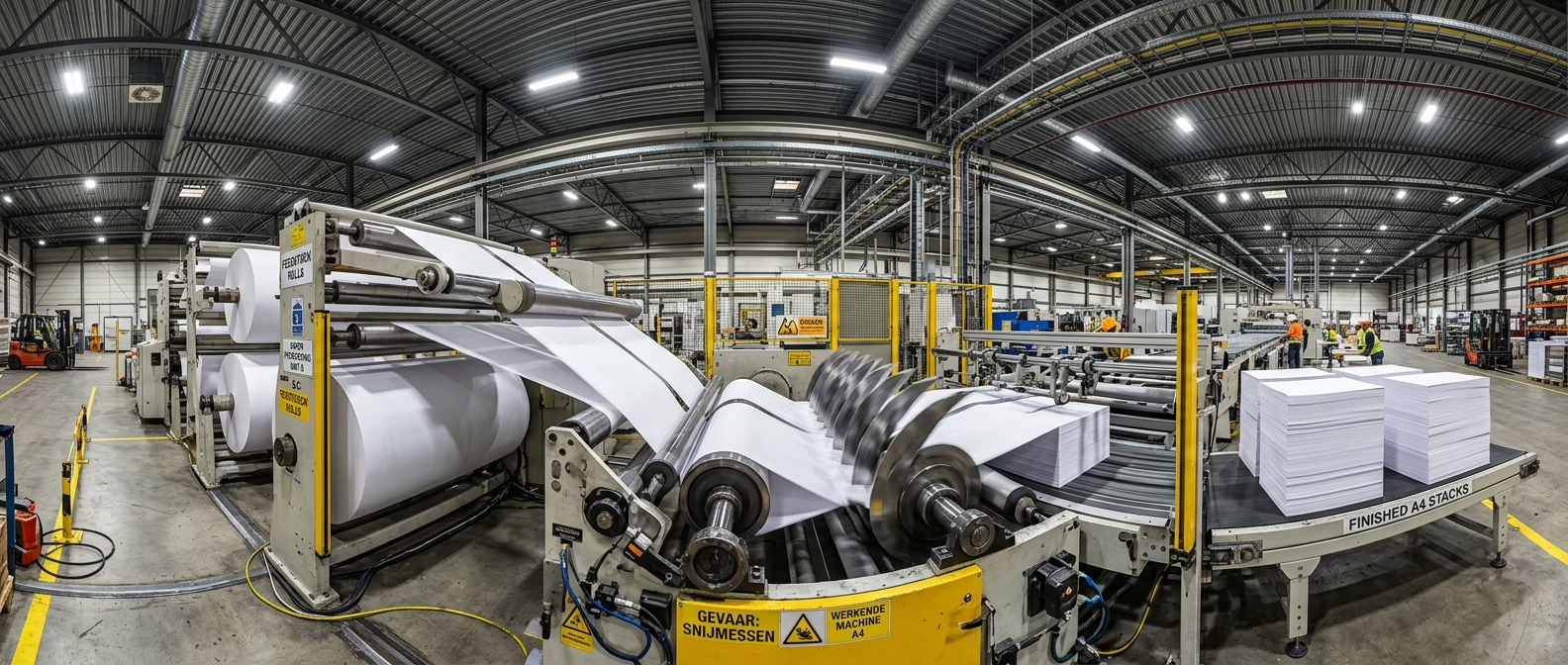
Slitter blades are designed for continuous cutting operations where materials must be divided into narrower rolls or strips. They are essential blade types in industrial applications involving large-scale production processes.
Long Slitter Blades
Long slitter blades are typically manufactured in standardized dimensions such as 60 × 22 mm. These blades are commonly used in high-speed slitting machines that process plastic films, metal foils, technical textiles, and laminated materials. They are available in several materials, including tungsten carbide, stainless steel, and hardened carbon steel.
Rotary or Circular Blades
Rotary blades are designed for machines that use a circular cutting motion. They provide smooth, continuous cuts and are widely used in the textile, tobacco, and food industries. Because of their rotating design, rotary blades maintain consistent cutting pressure and deliver high cutting accuracy.
Oscillating and Pointed Blades
Oscillating blades are specialized cutting tools designed for thicker or softer materials. Instead of rotating, these blades move rapidly back and forth to create precise cuts.
These blade types in industrial applications are commonly used for cutting foam, insulation materials, rubber, corrugated board, and textiles. Their pointed or elongated geometry allows them to penetrate dense materials while maintaining clean cutting edges. Oscillating blades are frequently found in digital cutting systems, CNC machines, and automated production lines.
Scraper Blades
Scraper blades are designed primarily for material removal rather than cutting. They are widely used in maintenance and surface preparation tasks.
Industrial scraper blades are typically installed in dedicated holders that provide safe and stable operation. These blades are ideal for removing adhesives, films, coatings, labels, and other residues from surfaces. In many industrial settings, scraper blades help maintain equipment and prepare materials for further processing.
Specialty Blades For Industrial Applications
Beyond the common blade categories, several specialized blade designs serve unique industrial applications.
Pelletizer Blades
Pelletizer blades are used in plastic processing and recycling systems. In underwater pelletizing systems, these blades cut molten plastic strands into uniform pellets that can be reused in manufacturing.
Fiber Blades
Fiber blades are long and narrow blades designed specifically for cutting glass fibers, carbon fibers, and technical textiles. Their geometry minimizes fraying and ensures precise cutting of delicate materials.
Potato Chip Blades
In the food processing industry, specially designed food-grade blades are used to slice potatoes into uniform chips. These blades must meet strict hygiene and material standards while maintaining consistent cutting performance.
Injector Blades
Injector blades are narrow blades with single or double cutting edges and often feature rounded corners to improve safety during installation and handling.
Why Blade Types Matter in Industrial Applications
Understanding the different blade types in industrial applications is essential for optimizing manufacturing processes. The correct blade type affects several key factors:
-
Cut quality: The right blade geometry ensures clean, precise cuts.
-
Efficiency: Proper blade selection reduces machine downtime and improves production speed.
-
Blade lifespan: Matching blade material to the application increases durability and reduces replacement frequency.
-
Safety: Correct blade design and mounting reduce risks for operators.
Industrial buyers should consider material type, cutting speed, machine configuration, and blade material when selecting blades for their operations.
At X-Keenblades.com, we supply a wide range of high-precision industrial blades designed to meet the requirements of modern manufacturing environments. By choosing the right blade type for each application, companies can improve productivity, reduce maintenance costs, and achieve consistent cutting performance.


