
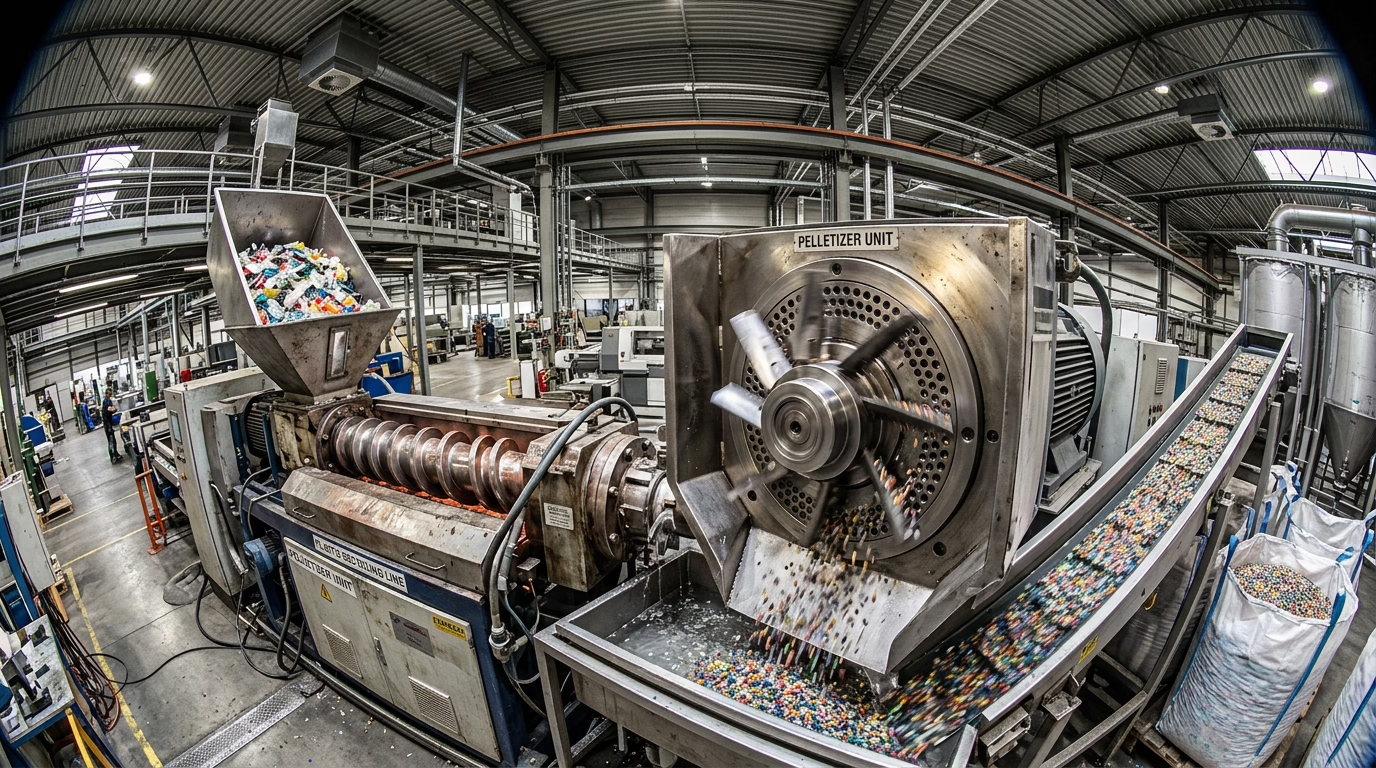
Blades for Pelletizing Mixed Plastic Waste (MPW): Performance, Materials, and Selection
As the global push toward circular manufacturing accelerates, pelletizing mixed plastic waste (MPW) has become a key upcycling technology. By transforming heterogeneous plastic streams into uniform, reusable pellets, manufacturers can reintroduce valuable materials back into production cycles. While machinery and process control play a crucial role, the performance of pelletizing blades is often the determining factor in efficiency, consistency, and operational cost. This blog helps you select the right blades for pelletizing mixed plastic waste (MPW).
The Growing Importance of MPW Pelletization
Mixed plastic waste presents a unique challenge due to its inconsistent composition, contamination levels, and varying melting behaviors. Among all plastic waste streams, polypropylene (PP) and polyethylene (PE) dominate in volume. In 2022 alone, the global market reached approximately 110 million metric tons for PE and 79 million metric tons for PP—highlighting the scale and importance of effective recycling solutions.
Pelletization offers a practical route to reclaim these materials by converting them into standardized feedstock suitable for extrusion, injection molding, and other manufacturing processes.
Overview of the Pelletizing Process
The pelletizing of MPW typically consists of four main stages:
1. Shredding – Reducing plastic waste into smaller, manageable fragments
2. Cleaning and Drying – Removing contaminants such as dirt, labels, and moisture
3. Extruding – Melting and homogenizing the plastic into a continuous flow
4. Cutting – Transforming the extruded material into uniform pellets
While each step is important, the final cutting phase is where blade performance becomes critical. Poor cutting results in irregular pellet sizes, material loss, and increased wear on downstream equipment.
Types of Blades Used in pelletizing mixed plastic waste
Different pelletizing systems require specialized blade designs, each tailored to specific materials and operating conditions.
Strand Cut Pelletizer Blades
Strand pelletizing involves extruding plastic into continuous strands, which are then cooled and cut into pellets. The blades used in this process must deliver clean, precise cuts to maintain consistent pellet size. Sharpness and edge retention are essential, as dull blades can deform strands instead of cutting them cleanly.
Granulator Blades
Granulator blades are primarily used in the shredding phase but remain critical for overall process efficiency. These blades break down larger plastic components into smaller pieces suitable for extrusion. Durability and resistance to impact are key, especially when dealing with contaminated or mixed materials streams.
Underwater Pelletizer Blades
In underwater pelletizing systems, cutting occurs immediately as molten plastic exits the die, submerged in water. This method is particularly effective for certain thermoplastics, as it allows rapid cooling and prevents strand deformation. Blades in this environment must withstand thermal shock, abrasion, and continuous operation in a wet environment.
Hot Die Face Pelletizer Blades
Hot die face pelletizing involves cutting molten plastic directly at the die surface. This process demands extremely precise and heat-resistant blades. One of the main challenges here is material sticking to the blade surface, which can lead to buildup and reduced cutting efficiency.
To address this, manufacturers often apply non-stick coatings that minimize resin adhesion and extend blade life. These coatings are especially beneficial when processing sticky or low-melting-point polymers.
Blade Materials: Choosing the Right Steel
The choice of blade material has a direct impact on performance, maintenance intervals, and total cost of ownership.
High-Speed Tool Steels
High-speed steels (HSS), such as ASP grades, D1, and D2, are among the most commonly used materials for pelletizer blades. These steels offer a strong balance between hardness, toughness, and wear resistance. They are particularly suitable for applications where blades must maintain sharp edges under continuous operation.
• D2 steel is known for its high wear resistance and good edge retention
• ASP steels (powder metallurgy grades) provide enhanced uniformity and longer service life
• D1 steel offers solid performance in less demanding environments
Tungsten Carbide Blades
For more demanding applications—especially where abrasive contaminants or harder materials are involved—tungsten carbide blades present a compelling alternative. With hardness levels reaching up to 92 HRC, these blades significantly outperform traditional tool steels in terms of wear resistance.
However, this increased hardness comes with reduced toughness, meaning carbide blades are more brittle and must be used in carefully controlled conditions to avoid chipping or fracture.
Matching Blades to Machines for pelletizing mixed plastic waste
Pelletizing performance is also influenced by machine compatibility. Leading manufacturers such as B+B Anlagenbau, Cumberland, Erema, Gala, Munchy, Vecoplan, and Weima each design their systems with specific blade geometries and tolerances in mind. X-Keenblades can match blades to any specifications you provide: provide your specifications here.
Choosing the right blade is not just about material—it also involves ensuring compatibility with the pelletizer system, operating speeds, and the specific characteristics of the plastic feedstock.
Key Considerations for Optimal Blade Performance
To maximize efficiency and lifespan, consider the following:
• Material composition of MPW – Mixed streams may require more wear-resistant blades
• Contamination levels – Dirt, sand, and metals accelerate wear
• Operating temperature – High temperatures demand heat-resistant materials
• Maintenance practices – Regular sharpening and cleaning extend blade life
Conclusion
Blades are at the heart of the pelletizing process, directly influencing output quality, operational efficiency, and maintenance costs. Whether you’re working with strand, underwater, or hot die face systems, selecting the right blade type and material is essential for success.
At X-Keen Blades, we understand that every application is unique. By combining advanced materials, precision engineering, and application-specific expertise, the right blade solution can transform your pelletizing process from a bottleneck into a competitive advantage.
